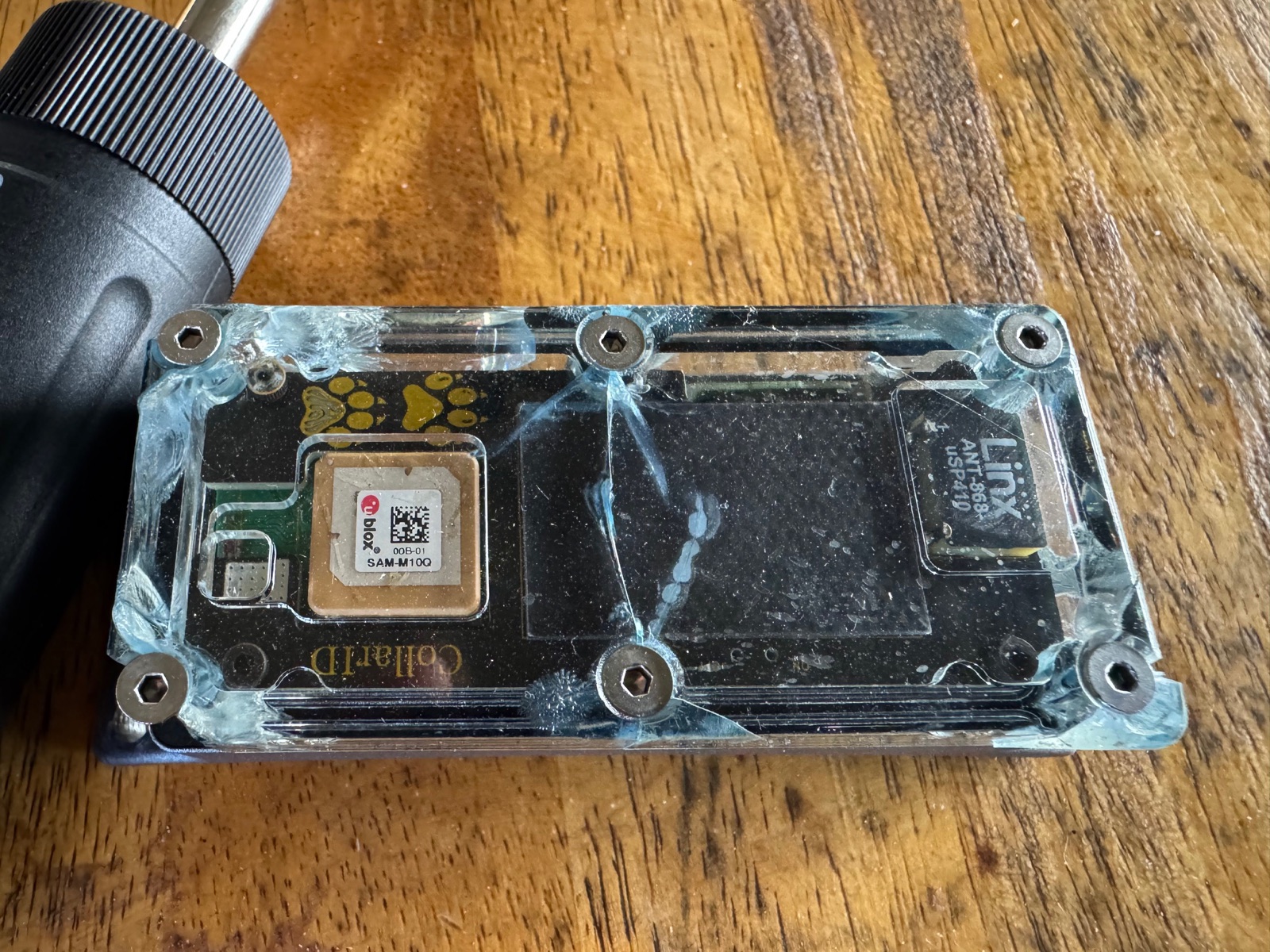
The prototype cover that cracked under pressureThis is a field note on an issue we found and resolved through field testing on prototype units, before we decided to scale CollarID and sell it as a platform. No batch of collars we have sold has had any reported cracking.
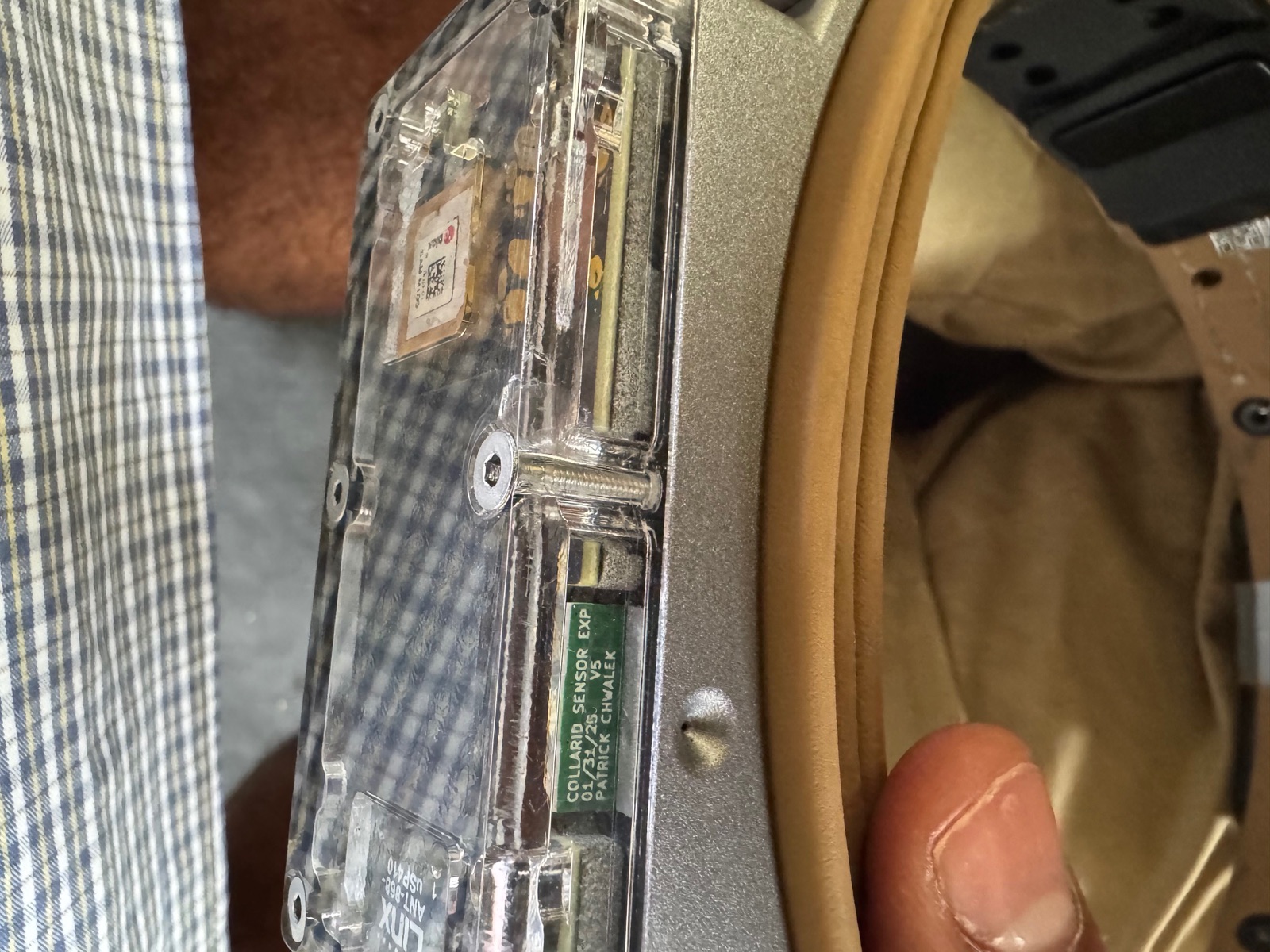
One November, two covers on an early pair of prototype collars cracked in Botswana while Rohan Wadhwa was getting ready to put a collar on a spotted hyena. The cover is the clear plastic window on top of the collar, the part you take off to get at the memory card and the switch, and it is held down by six screws. One cover cracked a little. The other split at every screw hole. We had seen a couple of cracked covers in the lab before that, but nothing like this, and it took a couple of months to work out what was going on. Part of it was the plastic, and part of it was our screw design. This issue is what we found, and what changed on the collar because of it. | |||||||
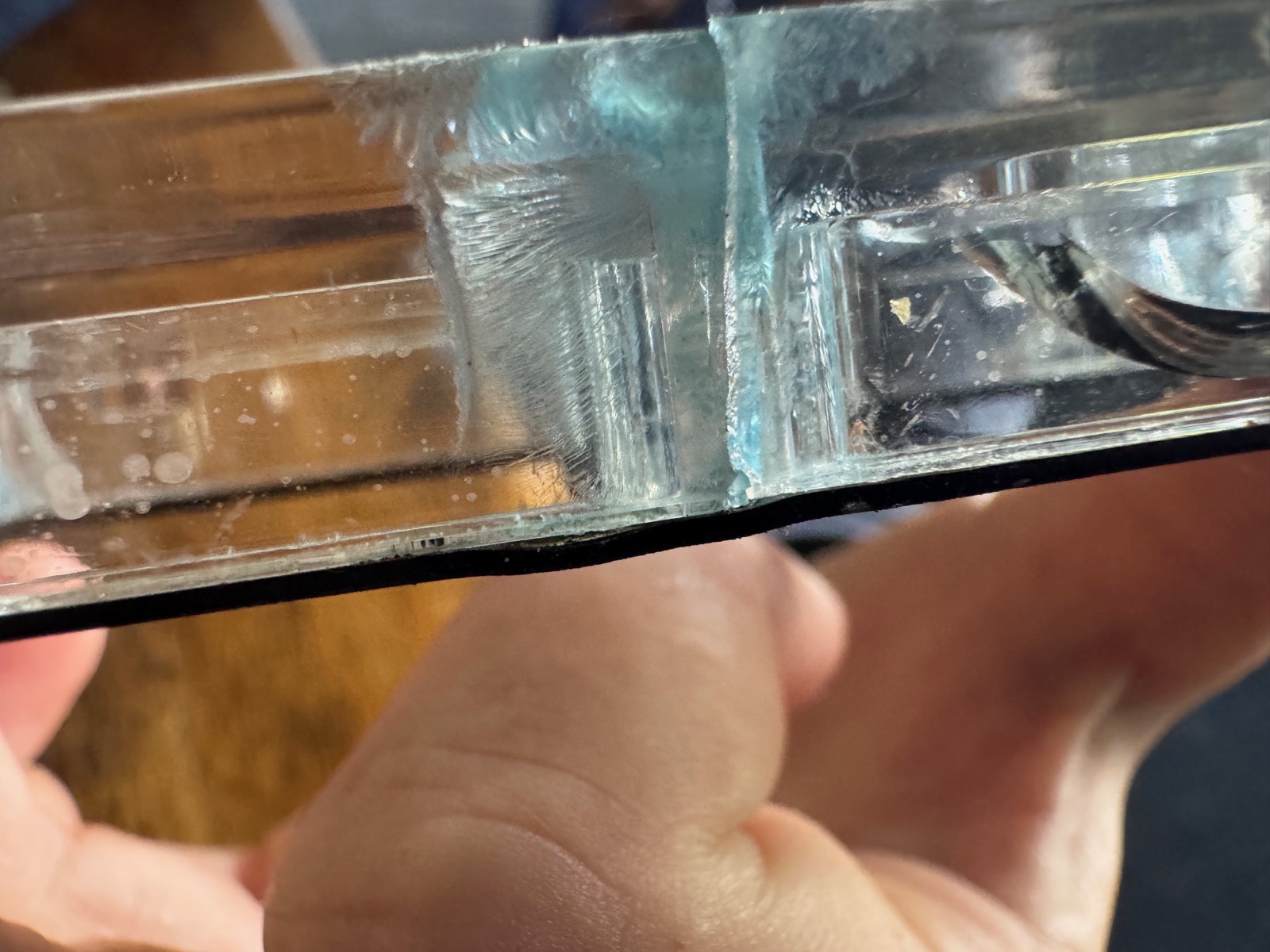
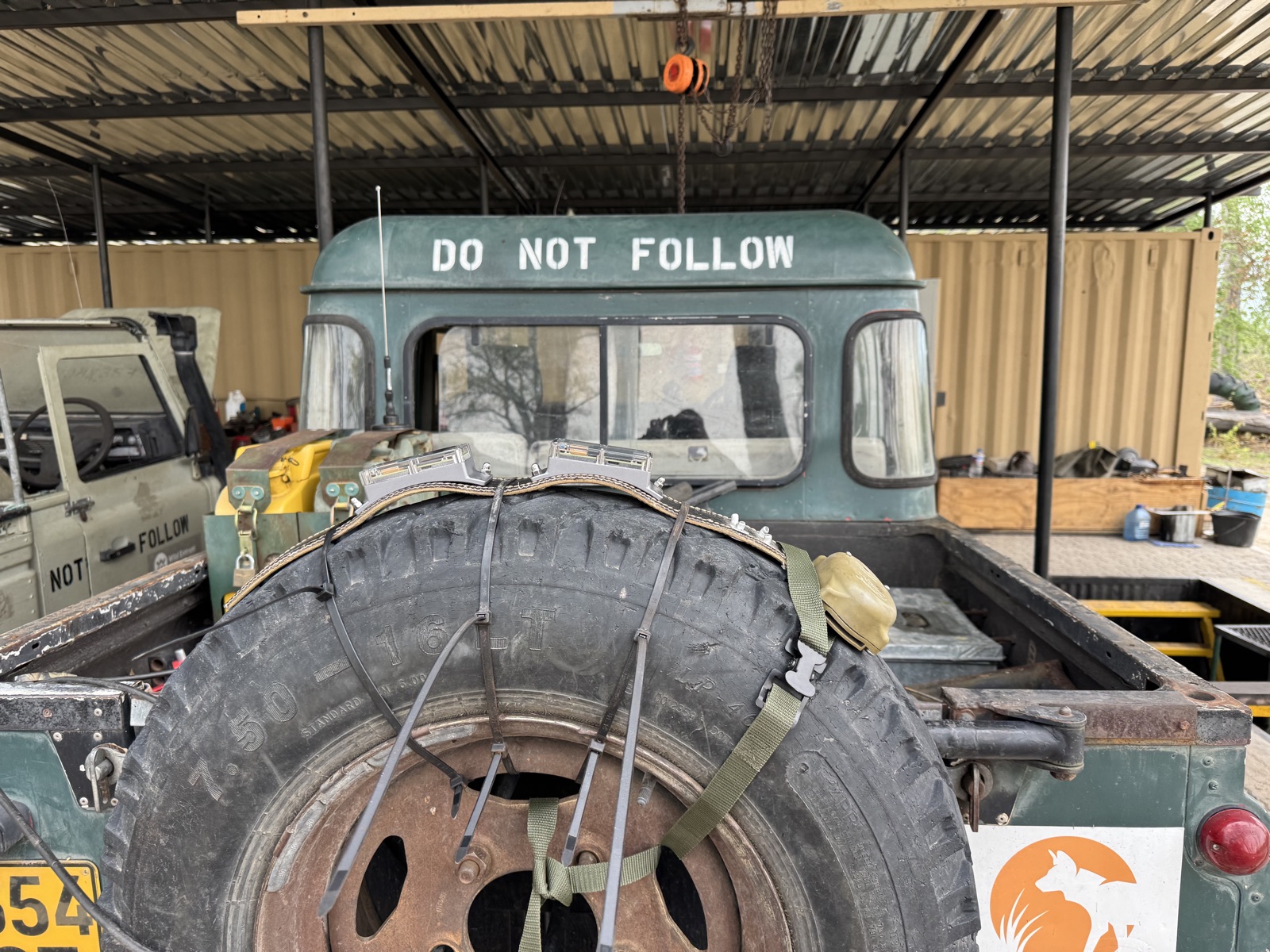
What happened in BotswanaThat November Rohan had two collars with him in Botswana and a darting permit that had just come through, for spotted hyena. He spent the first days driving the collars around on the back of a vehicle to check the radio range, and the covers had been on and off several times by then, opened for the memory card, the switch and the programming cable, and closed again with a small torque driver. Early in the month a cover cracked a little while it was being tightened, next to one of the two middle screws. It was a short crack, the kind you have to tilt the part in the light to see. I told Rohan to leave the torque driver in the bag, hand tighten the screws, put a drop of threadlocker on each one, and deploy the other collar. A couple of weeks later he did exactly that to the second cover, and it split at every single screw hole. Not a hairline this time. Rohan’s theory was that the threadlocker had swelled inside the holes and burst the plastic from within. Mine was that we had a bad batch of covers on our hands. We had seen a couple of cracks in the lab by then and were starting to suspect one batch of plastic, and the cracks looked like stresses locked into the plastic when it was made. I will come back to that. The next day he sent one more photo, taken edge-on, and it settled the first question. The cracks fanned out from the screw holes themselves. They did not come from the cover being pressed down.
With the darting a few hours away, Rohan swapped back to the first collar, the one with the short crack, put a little silicone on the screws instead of threadlocker, tightened by hand, and at the end of November the collar went on a hyena. He checked it through binoculars in the days afterwards and could not see any cracks. That matches what we have seen elsewhere: a cover that gets through its first day on an animal tends to stay put, and we have had the same covers on cattle for months without a crack moving. Back in the lab, the first thing we did when the photos arrived was pull the remaining covers from the same batch and try to make them crack. It was not hard. Screw after screw, cover after cover, the same fans of cracks appeared at the holes. Rohan’s two covers were the first sign of it, and the lab confirmed it was the batch. | |||||||
Polycarbonate is not one thingPolycarbonate is the right material for this part. It is clear, it bends before it breaks, and unlike acrylic it does not shatter when something bites it. We chose it on purpose and checked the design against lion and hyena bite forces before the first collar shipped. That part of the choice still stands. The problem is that “polycarbonate” on a quote is a family, not a material. There are many grades of the resin, with different additives for sunlight, different mould-release agents, different thicknesses of sheet from different extruders, and each sheet comes with its own internal stresses from the day it was made. Then the shop machines the part, which adds more stress around every cut edge and every hole. There is one more step. A machined polycarbonate part comes off the mill frosted, and to make it clear the shop exposes it to a solvent vapour that melts the surface a hair’s breadth deep and lets it flow glassy again. This is called vapour polishing. When it is done well you cannot tell it happened. When it is done too hot or too long, or on a part that already has stress in it, the surface ends up in a different state from the plastic underneath, and the part is weakest in exactly the places that were machined, which are the screw holes. So two shops can work from the same drawing and the same note, polycarbonate, vapour polished, and send back parts you cannot tell apart on the bench. We weigh every cover and check its optical clarity before it goes out, and every cover in that batch passed both. One batch takes a screw with no trouble. The other cracks. Both of Rohan’s covers were from the second batch. In one of my emails to him I called it Russian roulette, which was about right. | |||||||
Where the screw meets the plasticThe other half of the story is the screw, and that one was on us. The covers were held down with countersunk screws: a cone-shaped head sitting in a cone-shaped hole, flush with the surface. It looks clean and there is nothing for a branch to catch on. But a cone wedges. When you tighten it, the head pushes outward on the walls of the hole as much as it pushes down, and the sharp rim of the cone concentrates that push into a thin ring of plastic. On a good batch of covers there is enough margin that it does not matter. On a stressed batch, that ring is where the crack starts, and the photos show exactly that, a fan of cracks leaving each hole. What about the threadlocker? Honestly, we do not know. Polycarbonate that is under stress can crack around some solvents, and most threadlockers are carried in one, so it is possible that a generous amount wicking into a hole that was already at its limit made things worse. We have not been able to show that on the bench, and the covers from the same batch cracked in the lab without any threadlocker at all, so I do not think it was the cause. At most it was a contributor. Either way, the fitting advice below keeps it off the plastic.
| |||||||
What we tried in the labMy first guess was that the stress from machining was the whole story, and there is a standard remedy for that. You bake the parts slowly to just below the point where the plastic softens, hold them there, and cool them slowly, which lets the locked-in stress relax. It is called annealing, and it works well on most machined plastics. We annealed covers from the suspect batch at several temperatures and several durations, then put screws into them the way a researcher would in the field. It did not help. Some of the annealed covers cracked just as the untreated ones had. Whatever was wrong with that batch was in the material and the polishing, not something an oven could undo. That was still worth knowing. We could not rescue the batch, and the cracking was not an assembly mistake that better instructions would fix. | |||||||
What fixed itTwo things, done at the same time.
None of the covers from the bad batch went to a customer. There is also a change in what we ask of you, which is already in the manual. Tighten the cover screws by hand, until they are snug, not until the torque driver clicks. If you use a threadlocker, use a low-strength one, and put a drop on the tip of the screw, where it enters the aluminium, not on the plastic. The threadlocker is doing the holding. The screws only need to be snug.
| |||||||
|
Thanks to Rohan, who photographed everything, kept the pieces, and was more patient about it than I would have been. His two covers were what sent us back to the lab, and most of what is in this issue came from what we found there. If a cover has cracked on you, on our hardware or anyone else’s, I would like to see it: a photo in good light, edge-on if you can, and the batch or the date it was made. Patrick Patrick Chwalek, PhD · New Lens Labs |